


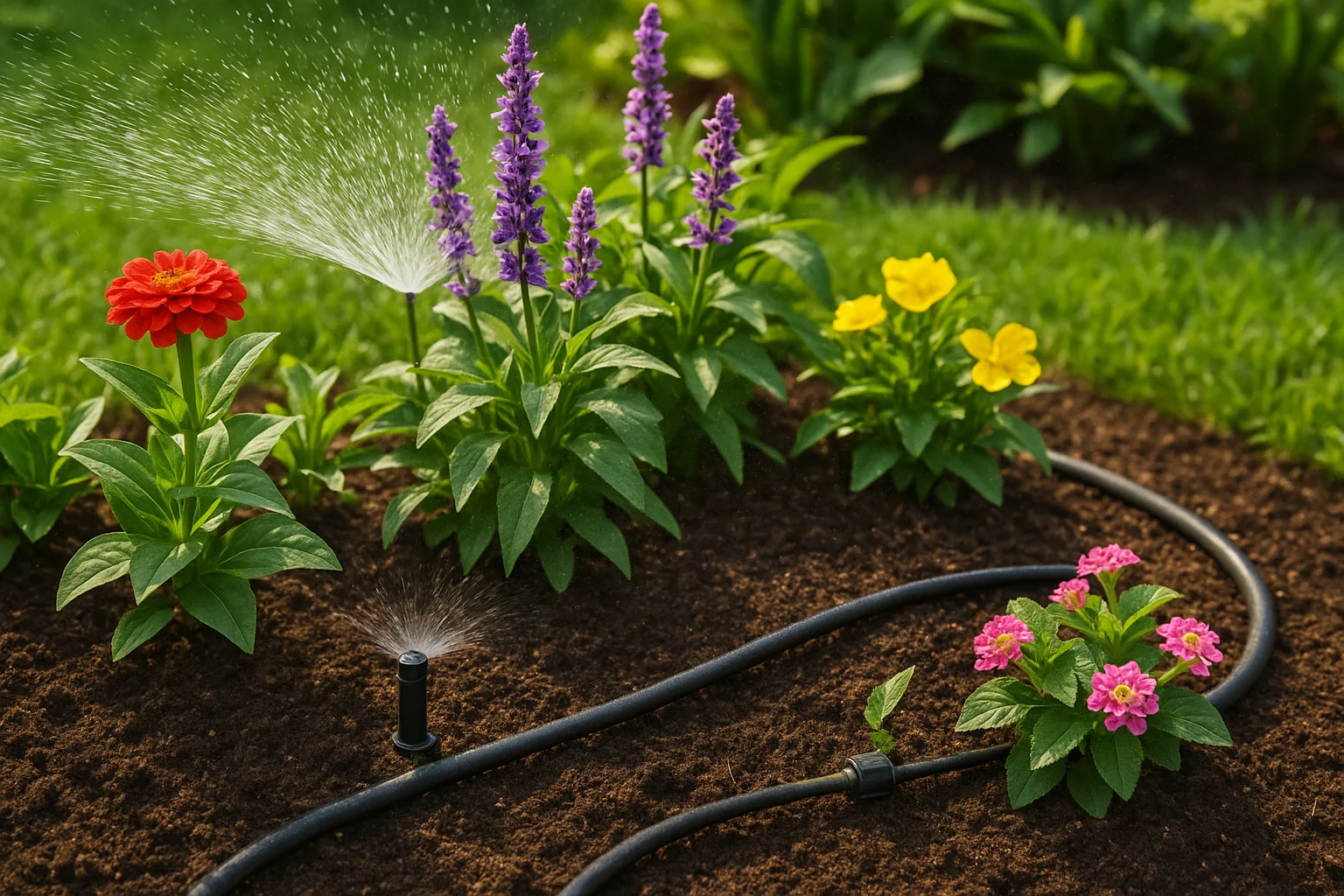
Colorado's semi-arid climate makes consistent, efficient irrigation more important here than in wetter regions, where natural rainfall does more of the work automatically. Hand-watering or relying on inconsistent rainfall alone often leaves lawns and planting beds under-watered during the hottest, driest stretches of a Front Range summer, while an automatic system delivers the same measured amount of water to every zone, whether you're home or not.
Why Irrigation Matters More in This Climate
Grass and planting beds need consistent, even moisture to develop strong root systems, and Colorado's low humidity and intense sun accelerate evaporation significantly compared to more humid climates. This means water applied inconsistently, or through hand-watering that doesn't reach every area evenly, often isn't enough to keep a landscape healthy through a full Front Range growing season.
Designing Around Water Restrictions
Many Denver Metro municipalities implement watering schedules or restrictions during dry years, and a properly designed irrigation system with smart scheduling capability helps homeowners stay within these restrictions while still delivering water efficiently to the areas that need it most, rather than wasting water on areas that don't.
Zoning for Different Water Needs
No two areas of a property water the same way, and a proper irrigation design accounts for this rather than treating a landscape as one uniform zone. Sun and shade areas typically need different watering frequencies, sloped areas need slower, longer cycles to prevent runoff, and planting beds often benefit from drip irrigation zoned separately from turf areas watered through spray or rotor heads.
Drip Irrigation for Xeriscape and Planting Beds
For homeowners incorporating xeriscape principles or drought-tolerant plantings, drip irrigation delivers water slowly and directly to the root zone, wasting far less to evaporation than overhead spray systems and reducing the risk of fungal issues from wetting foliage directly, which matters even more in a climate where every drop of water counts.
Smart Controllers Built for Colorado's Weather Swings
Modern smart controllers adjust watering schedules automatically based on real-time weather data, skipping cycles after rainfall and adjusting run times during hot, dry stretches. Given how quickly Front Range weather can shift from a rainy afternoon to weeks of dry heat, this kind of automatic adjustment reduces water waste far more effectively than a fixed manual schedule.
Winterization Is Essential, Not Optional
Colorado's frost depth means every irrigation system installed here needs a proper winterization plan built in from the start, including backflow preventers, drain points, and a full blowout process each fall before freezing temperatures arrive. Skipping this step, or hiring an installer unfamiliar with our climate, is one of the most common causes of cracked pipes and costly spring repairs.
Protecting Your Broader Landscape Investment
If you've invested in sod, new plantings, or xeriscape design, irrigation is what protects that investment through establishment and every dry stretch afterward. Inconsistent watering is one of the leading causes of new plant and turf failure in a climate as dry as ours.
Why Professional Design Matters
An irrigation system designed specifically around your property's zones, slope, and plant selection performs far more efficiently than a generic system installed without accounting for these details, particularly in a climate where water efficiency directly affects your utility bill and your compliance with local restrictions.
The team at Red Rock Outdoor Living designs irrigation systems across Thornton and Denver Metro built to keep landscapes healthy while using water as efficiently as our dry climate demands.

Ready for an irrigation system built for Colorado's climate? Reach out to Red Rock Outdoor Living today.


